


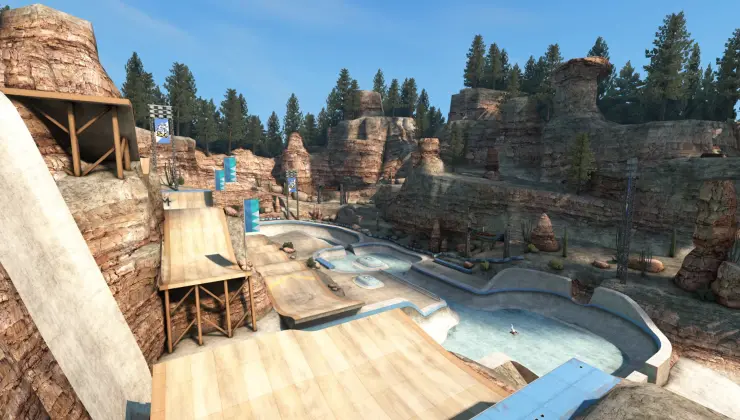
The beloved skateboarding game Skate 3 has received a major technical upgrade through the Skate 3 Recomp 2.0 project, which brings the classic Xbox 360 title to modern platforms with significantly improved rendering capabilities. This community-driven effort now features a modern renderer utilizing Vulkan for Linux systems and Direct3D for Windows, marking a substantial leap forward in preserving and enhancing this iconic sports game for contemporary hardware. The update represents years of dedicated work by enthusiasts who refused to let this fan-favorite title fade into obsolescence.
Key Points
- Skate 3 Recomp 2.0 introduces native Vulkan and Direct3D renderers, eliminating the performance overhead of translation layers
- The project uses static recompilation to convert Xbox 360 code into native PC instructions rather than emulating the console in real-time
- A legal Xbox 360 game dump is required; the tool does not distribute copyrighted game files
- Linux and Steam Deck users benefit from the Vulkan renderer, with even integrated GPUs reportedly achieving stable performance
- The release arrives while EA’s official sequel skate. remains in development at Full Circle studio since 2020
Originally released by Electronic Arts in 2010, Skate 3 quickly became one of the most celebrated skateboarding games ever made. The title distinguished itself from competitors like the Tony Hawk series by implementing a revolutionary “flick-it” control system that mapped skateboard tricks to analog stick movements, creating a more intuitive and realistic skating experience. Despite its critical acclaim and dedicated fanbase, EA never officially released a PC version of the game, leaving computer gamers without access to this definitive skating experience for over fifteen years.
How Static Recompilation Differs from Emulation
The Recomp project utilizes a sophisticated technique known as static recompilation, which differs fundamentally from traditional emulation approaches. Rather than interpreting console code in real-time like conventional emulators, recompilation translates the original Xbox 360 executable into native code that runs directly on modern processors. This method eliminates much of the performance overhead associated with emulation, allowing the game to run smoothly even on modest hardware configurations. The technology has gained significant traction in the preservation community as a viable alternative to standard emulation practices.
Version 2.0 of the Skate 3 Recomp project represents a complete overhaul of the rendering pipeline. Previous versions relied on compatibility layers and translation techniques to display graphics, which often introduced latency and visual artifacts. The new native renderer, built using Vulkan for cross-platform compatibility and Direct3D for Windows-specific optimizations, communicates directly with graphics hardware. This architectural change results in improved frame rates, reduced input lag, and more accurate visual reproduction of the original game’s aesthetics.
Why Unofficial Preservation Projects Keep Growing
| Aspect | Traditional Emulation | Static Recompilation |
|---|---|---|
| Execution method | Interprets console code in real-time | Translates code to native instructions ahead of time |
| Performance overhead | Higher, requires powerful hardware | Lower, runs on modest systems |
| Graphics pipeline | Often uses translation layers | Direct GPU communication via Vulkan/D3D |
| Typical issues | Latency, visual artifacts | Requires per-game development work |
Projects like Skate 3 Recomp highlight the growing importance of game preservation in an era where digital storefronts can disappear overnight and physical media becomes increasingly rare. The Xbox 360 generation produced numerous titles that remain trapped on aging hardware, inaccessible to newer audiences and at risk of being lost entirely. Community-driven preservation efforts have become essential in maintaining gaming history, particularly for titles that publishers have shown little interest in officially remastering or porting. The legal gray areas surrounding such projects continue to spark debate, though many argue that preservation serves the broader cultural interest.
The timing of this release is particularly notable given the ongoing development of the official Skate sequel, simply titled “skate.” (stylized in lowercase), which has been in development at Full Circle, a new EA studio, since 2020. While fans eagerly await this new entry in the franchise, the Recomp project ensures that the classic Skate 3 experience remains accessible and playable on current systems. The project demonstrates the technical ingenuity of the gaming community and their commitment to preserving beloved titles regardless of official publisher support.
System Requirements and How to Get Started
Users interested in experiencing Skate 3 Recomp 2.0 should note that the project requires a legal copy of the original Xbox 360 game to function. The recompilation tool works with game dumps extracted from legitimate discs, maintaining compliance with preservation ethics while providing enhanced functionality. The Vulkan renderer option makes the project particularly attractive for Linux users and those running the Steam Deck, expanding accessibility beyond the Windows ecosystem. Performance benchmarks suggest that even integrated graphics solutions can achieve stable frame rates, democratizing access to this classic title.
The release of Skate 3 Recomp 2.0 underscores a broader trend in gaming where community developers fill gaps left by publishers. As hardware generations continue to evolve at rapid pace, projects utilizing recompilation technology may become increasingly important for maintaining access to gaming’s rich heritage. For longtime fans of the Skate franchise and newcomers alike, this update offers the definitive way to experience one of the greatest skateboarding games ever created on modern hardware.
What This Actually Changes for Skate Fans
For the past fifteen years, playing Skate 3 on PC meant either wrestling with Xbox 360 emulators or hoping EA would eventually port the game. Neither happened in a satisfying way. Recomp 2.0 sidesteps the emulation performance tax entirely by converting the original executable into code your CPU runs natively, while the new renderer talks directly to your GPU. The practical result is lower input lag and smoother frames—crucial for a game built around precise analog stick inputs.
Steam Deck and Linux compatibility is the underrated story here. Vulkan support means the project slots neatly into Proton-free setups, giving handheld PC users a portable Skate 3 experience that simply did not exist before. Integrated graphics support further lowers the barrier.
The broader implication is pressure on publishers. When a volunteer team delivers a better-running version of a fifteen-year-old game than any official option, it raises awkward questions about why EA never shipped a PC port. Whether this accelerates or complicates the skate. rollout remains to be seen, but demonstrated demand is now harder to ignore.
Common Questions
Is Skate 3 Recomp 2.0 legal to use?
The tool itself does not distribute copyrighted content. You must supply a dump from a legally owned Xbox 360 disc. Legality varies by jurisdiction, but the project follows common preservation ethics by requiring users to own the original game.
Does Skate 3 Recomp work on Steam Deck?
Yes. The Vulkan renderer is designed for Linux compatibility, and early reports indicate stable performance on the Steam Deck’s integrated graphics without needing Windows or Proton.
How does static recompilation differ from Xenia or other Xbox 360 emulators?
Emulators interpret console instructions on the fly, which demands significant CPU power. Recompilation translates the game code into native PC instructions once, so your hardware runs it directly with far less overhead.
Expert Opinion: The advancement of static recompilation technology, as demonstrated by Skate 3 Recomp 2.0, signals a potential paradigm shift in game preservation methodology. Unlike traditional emulation, which faces ongoing accuracy and performance challenges, native recompilation could become the gold standard for bringing legacy titles to modern platforms. We may see this approach applied to other Xbox 360 and PlayStation 3 era games in the coming years, potentially pressuring publishers to either embrace these preservation efforts or release official versions to meet demonstrated consumer demand.